
Your technology
Sensors, pumps, hybrid closed loop and smart pens make exercising with Type 1 diabetes easier than it has ever been. Find your set-up below.
Find your set-up
Three ways of taking insulin
Injections
Also called MDI - multiple daily injections
If you eat 90 minutes or less before exercise, reduce the mealtime insulin (bolus) for that meal.
A common starting point is halving that dose. Change it in small steps.
You cannot take insulin back once it is in, so plan before you inject.
Pump
An insulin pump you set yourself
You can lower your background rate before and during a session.
Setting it around 60 to 90 minutes ahead works better than at the last moment.
Keep the lower rate going for a few hours afterwards to help avoid a late low.
If you eat 90 minutes or less before exercise, reduce the mealtime insulin (bolus) for that meal.
Hybrid closed loop
A pump and sensor that talk to each other
Use the exercise or activity mode if your system has one, and switch it on early - ideally around 90 minutes before you start.
The system reacts to what has already happened, so it needs a head start.
You may still need carbs during longer sessions.
If you eat 90 minutes or less before exercise, reduce the mealtime insulin (bolus) for that meal.
Sensors
Reading your trend arrows
The direction your glucose is heading tells you more than the number on its own. Here is what each arrow usually means before a session.
↓
Falling
Your glucose will keep dropping once you start. Have carbs first, or wait.
→
Steady
A good sign. Start, then check again after about 20 minutes.
↑
Rising
You may be fine to start. Check why it is rising - recent food, or a missed dose?
Starting high does not protect you. Starting with a high glucose does not stop you going low. It is better to start in range and take fuel on board as you exercise - little and often works well.
Sensors lag behind. Your sensor reads the fluid under your skin, not your blood. In the first 15 minutes or so of exercise it is getting used to the movement and sweat, so it may not show much change. After that it can be a few minutes behind - especially when your glucose is moving fast. If the reading does not match how you feel, do a finger-prick test.
Practical questions
Wearing your kit while you move
The everyday things nobody tells you.
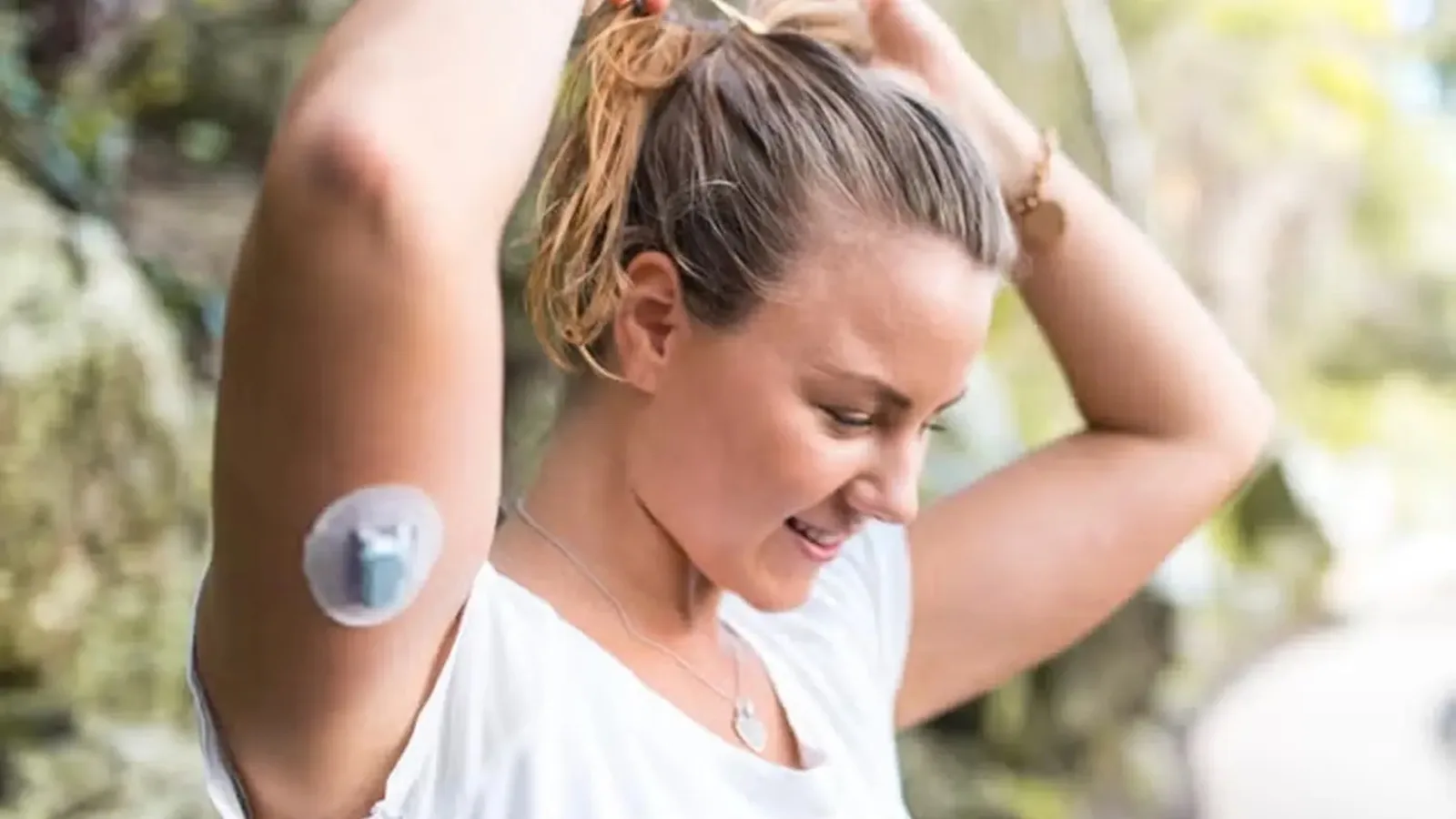
Will my sensor stay on?Usually, with a bit of help.
- An overpatch or strong tape over the top helps in water and in contact sport
- Put a new sensor on a day before a big event so it has settled
- Pick a spot that will not get knocked by a strap, waistband or bag
Swimming and water sportsCheck what your kit can handle.
- Most sensors are fine for swimming; check the depth and time limits for yours
- Pumps often need to come off - ask your team what to do about the missed insulin
- Have your hypo treatment at the poolside, not in a locker
Cold, heat and altitudeThey change how your kit behaves.
- Cold can slow your sensor and make readings look lower
- Keep your pump or pen close to your body in very cold weather
- Heat speeds up how fast insulin is absorbed, so lows can come on quicker
Your next step
Keep going
Find other people who exercise with Type 1, get common questions answered, and see what is coming up.